The biggest inspiration that helped me grow my portfolio and achieve financial independence was the fact that other people out there have done it and are talking about it on the internet! That’s why I started this blog – so I could spread the word and let you know that, dear reader, financial independence is possible for anyone.
So to help spread the word, I’m going to start sharing the people, or, ‘FIRE-starters’ who inspired me the most. They come from different generations and backgrounds, but they all have the following things in common:
- They each had a reason to pursue FIRE (Financial Independence, Retire Early) that was unique to them
- They kept a budget and lived frugally
- They invested in the stock market through low-cost, broad-based index funds and stayed the course through major market drops
- Many of them lived in cost-effective parts of the world while their portfolios grew, a concept known as geo-arbitrage
- They chose not to follow modern social pressures to accumulate stuff. They used money to buy their freedom instead
So make yourself a nice cup of pumpkin-spiced something, pull up a comfy chair and let’s find some inspiration from the FIRE-starters out there who are living their best lives and want to show us how!
FIRE-starter #1: How Clark retired at 36 to sail around the world
Back in the 1980s Clark was a software consultant in the burgeoning days of tech. He realized that if he worked hard, saved aggressively and invested in the stock market, he might be able to realize his dream of retiring early to sail around the world. He made a plan and stuck with it for years.
At the age of 36, Clark finally realized he had enough. He left the corporate world and set sail right before the early 2000’s dot-com bubble burst, dragging his investments down with it. His portfolio eventually recovered and Clark, now 55, has a lifetime of beautiful memories from 20 years of sailing to far-off tropical places. “I’m so glad I made those decisions in my 20s and stuck with them in my 30s and 40s,” he says in his video, “it’s given me such a wonderful life.”
Watch Clark’s YouTube video, How I retired at 36 and spent 20 years sailing as well as his stock market series on YouTube. He explains how the stock market works in a fun and digestible way.
Two things strike me about Clark’s journey:
- He did not get rich overnight. It took many years of diligent saving, frugal living and investing
- He tightened his belt and stayed the course during major market crashes, allowing his portfolio to recover and grow larger than ever
While we don’t know the exact value of Clark’s original portfolio when he retired in the early 2000s, we can run our own simulation through Portfolio Visualizer using their Backtest Portfolio Asset Allocation tool to see if we can replicate his FIRE journey. And his is a case worth examining, because it turns out Clark retired right before not one, but two massive historical stock market crashes: the dot com crash of 2000 to 2002 and the global financial crisis of 2007 to 2009. In retirement planning, Sequence of Return Risk is the risk that you could potentially erode your portfolio if you retire into a down market and withdraw too much too soon before the market has a chance to recover.
Let’s say we started on December 31st, 1999 with $500,000 USD invested in the Total US Stock Market. Now let’s say we withdrew 15k per year (about 3% of our starting portfolio) to cover our costs while out sailing from port to port. 15k doesn’t sound like a lot in today’s dollars, but it would have been more than enough for a sailor like Clark to spend on dried sailor food and sunscreen in the early 2000s. If we stuck to our guns and only continued to withdraw 15k per year through the choppy waters of 2000-2002 and 2007-2009, only ever increasing our withdrawal by a few percentage points for inflation, our portfolio would eventually recover with the stock market and would be worth $1,364,798 today! Inflation would allow us to withdraw up to 29k by 2026, which would be about 2% of our now 1.3 million-dollar portfolio. Given our large portfolio, we could probably safely increase our withdrawal budget to 3% of our total portfolio value, which would give us 40k in today’s dollars, a comfortable budget to continue sailing around the world in 2026.
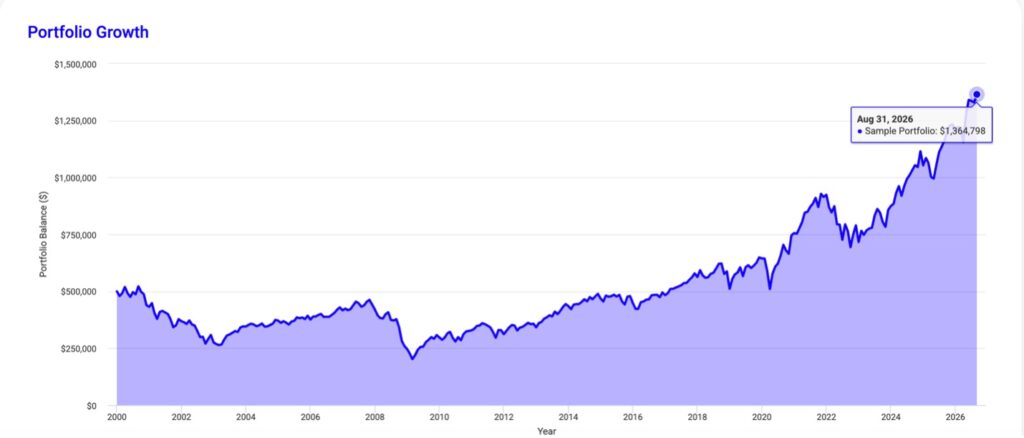
However, the key here is that we would have only taken out 15k/year in the first decade of retirement, which would have allowed us to keep more of our portfolio invested during the early market drops. If we had taken out 20k per year (just 5k more!) in the early days of 2000-2009, our portfolio would have eroded significantly, leaving us with a final portfolio value of $395k in 2026.
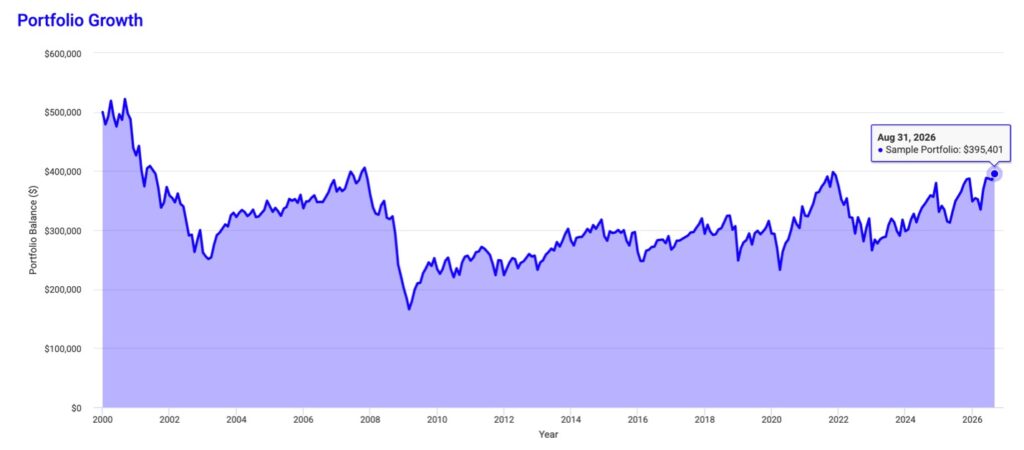
This is not to say that FIRE doesn’t work, it’s more to remind ourselves that frugal living and prudent withdrawals in the early years of retirement are part of a larger financial plan, to ensure the later years are filled with smooth waters and calm sunsets.
Can you see yourself retiring full-time on a sailboat or are you more of a beach person?
Check out Clark’s other videos from his “Enough is Enough” series on YouTube!
Leave a Reply